IN STEREO
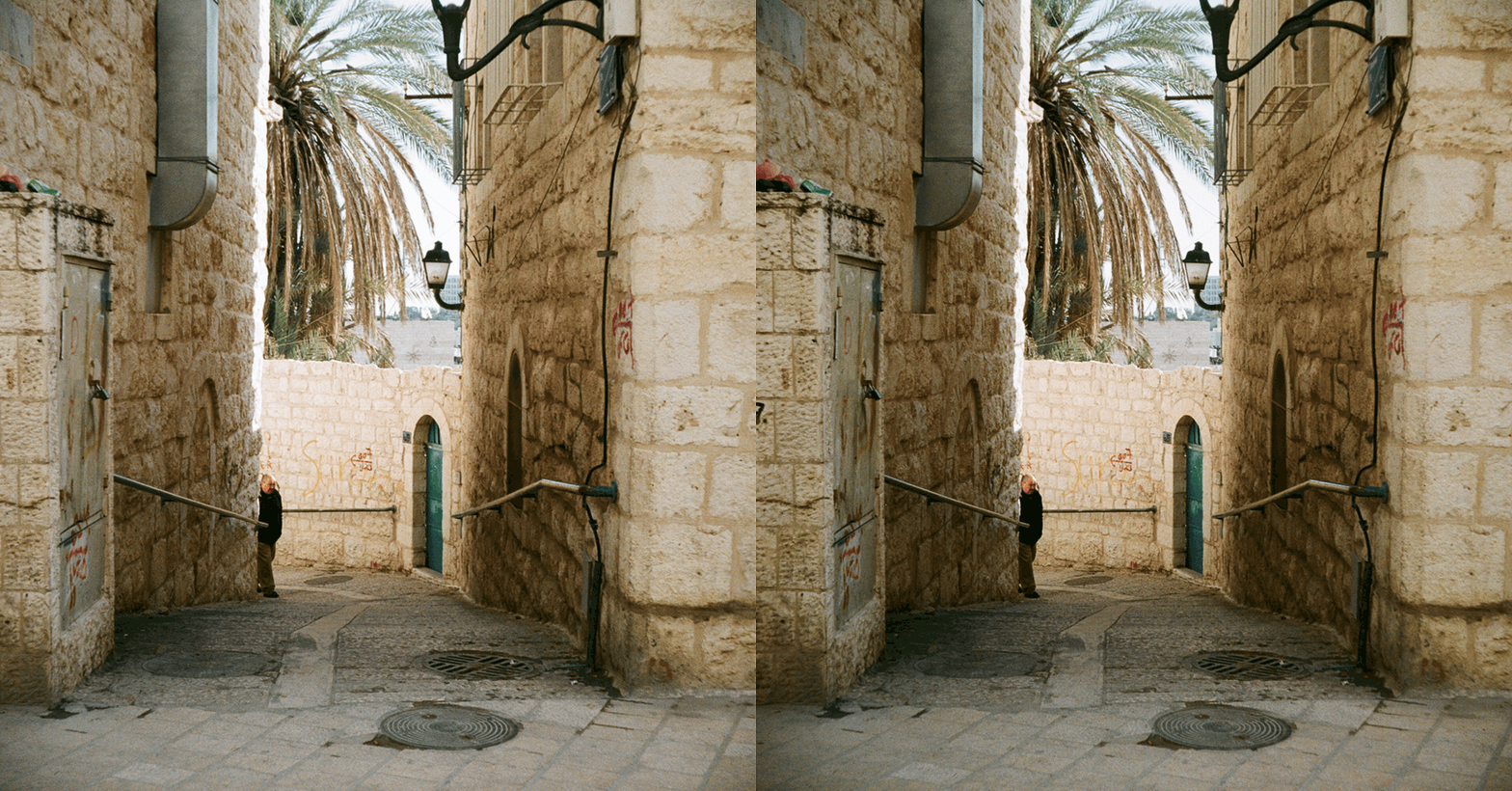
I live in Bethlehem now, but I'm originally from Hebron. I love walking around. The first year I came here, I spent more than three hours every day just walking around. Every day. And now I know a lot of the city more than friends who are from Bethlehem. I remember when we used to go out, and I would say, “Take this way because it's faster.” And they're like, “I've never been here before! Where are you taking me?” Then they would be so surprised. But that is how you travel inside of your own head. When you're always in a place, like in your hometown, maybe you're not interested in finding new places. But actually no, there are a lot of places you don't know. My city [Hebron] is one big place. And everyone is the same. We don't have different parts and different cultures. We don't have any refugee camps inside our city. The villages are really far away from the city. But here, it's a small place that has maybe seven different parts, you know? The first year I came here, I was really surprised when they said that Beit Sahour is a city and Bethlehem is a city and Beit Jala is a city. It's like, what? They are three streets next to one another. So it was crazy. When I met my friends from Beit Sahour, I was like, “Yeah, we can meet in the Manger Square.” “You want me to travel to Bethlehem?!” It's a five-minute drive – or a ten-minute walk. Actually, I've never talked about this – I've only noticed this, I lived this. Because I was the ‘other’ person, always. The same as the geographical parts, each religion is 'closing on itself' – that's what we say. Maybe it's about the religious side and the geographical side, the economic difference and everything. We can all connect them with one idea: that each one is not getting to know the other one. The ‘other’. That's it, yeah. – Rana